
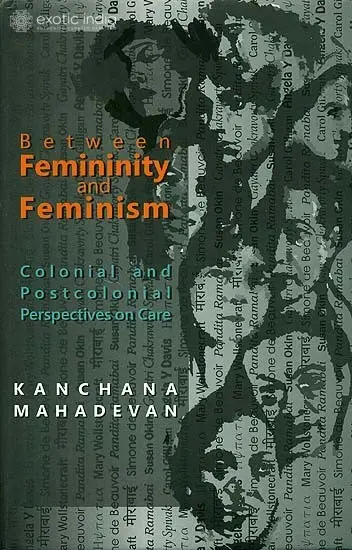
In this endeavour, this book maps the shifts in feminist approaches to care from the colonial to the post-colonial periods, taking both inter- disciplinarity and inter- sectionality into account. The book also argues that the feminist debate on care has contributed towards making philosophy’s boundaries with culture and social science more porous.
Challenging some of the foundational assumptions of the dominant paradigms that have informed mainstream disciplines, feminist philosophies have sought to interject women’s experiences within these theories. By the 1980s these tentative attempts to delineate women’s lived experiences within the existing theoretical paradigms soon gave way to criticism of the epistemological traditions of thinking in hierarchical-binary opposition, in terms of the mind-body, nature-culture, reason-feeling and private-public divide (Jaggar and Bordo 1992: 1-10). These epistemological questions challenged the seeming divide in philosophical traditions between the inner self and the external world. They critiqued the tools of articulation, interpretation and analysis that substantiated male standpoint as the norm (Friedman 2000:205-24). To overcome some of the limits to the traditional mind-centred approach to knowledge, feminist theories became increasingly self-reflexive.
This criticism of mainstream theories does not indicate that feminism is not without its own tensions. Like all complex schools of philosophy, feminism too encapsulates diverse viewpoints. Thus, a concern for women’s autonomy and independence may lead to the conceptualization of theories in terms that do not recognize human interdependence. Conversely, a concern to stress the capacities of women for caring and empathy with others may lead to the conceptualization of such capacities in terms that offer women little space to meet the needs of the individual self (Grimshaw 1986: 10-15). As Friedman (2000) argues, despite the evidence of a dilemma between moral autonomy and the ethics of care there are certain key principles in feminist ethics. Feminist ethics (as other branches of feminist theoretical engagements) is grounded in a commitment to end oppression, subordination and exploitation of women. Therefore, it has focused on restrictive silhouettes of women’s lives (such as marriage and motherhood, as well as discrimination in employment and entitlements) – precisely those areas neglected by traditional debates on ethics.
The Theoretical Frames of the Book The theoretical frames of Between Femininity and Feminism: Colonial and Postcolonial Perspectives are located within these debates in feminist moral philosophy. The broad contours of the debate are triggered by Carol Gilligan’s empirical studies on the correlation between gender and ethics. Gilligan suggests that men are characteristically concerned with substantive moral matters of justice, rights, autonomy and individuation, while women are concerned with care and personal relationships. The difference in moral reasoning of men and women implies that men focus on abstract and universalist principles, whereas women are concerned with the immediate and the particular. Gilligan’s ideas contributed significantly to the conceptualization of women’s selfhood within the ethics of care. Along with many other feminists, defined as radical-cultural feminists, her work emphasized that women’s distinct traits and moral reasoning were not necessarily inferior to those of men. The real problem is that society has failed to appreciate women’s ethics of care. These revolutionary concepts challenged the prevailing utilitarian and Kantian frames in the 1970s and triggered a search for alternative theory of care ethics, highlighting the moral importance of caring practices. Despite the revolutionary potential for development of an alternative paradigm on the ethics of care, there were voices of protest against such a conceptualization of women’s ethics: for an ethics of care based on women’s experiences as a primary caregiver in the family could reify prevailing differences of gender.
The struggle between femininity and feminism in the philosophical corpus of feminist thinkers such as Ramabai, Wollstonecraft, Gilligan, Okin and de Beauvoir is examined with reference to the concept of care. This book takes pioneering feminism during the colonial period as its starting point, and moves to its second wave during the postcolonial period to examine the trajectory of the concept of care. There are several reasons for choosing these periods to discuss feminist philosophy. Feminist consciousness itself is reflected through women writing critically about patriarchy and politics, during these periods. Further, the intersection between Western feminism and non-Western contexts can be explicitly discerned during the periods of pioneering feminism and the second wave. The former with its overlap between life and writing, and the latter’s overtly theoretical concerns are diverse ways of engaging with philosophy from the perspective of “lived experience”.’ By inserting their activist autobiographies in philosophical reflection, pioneering feminists opened the possibility of theorizing the concept “woman”. Although second wave feminists do not adopt an explicitly activist or autobiographical mode, by adopting the term “woman” in their theorization, they subscribe to intersection between the personal the philosophical. The latter intersection is explicitly theoretical, although it emerges from years of activism. Since the domain of lived experience is heterogeneous, both pioneering and second wave feminist thought have contemporary relevance.
Women, whether Western or non-Western, do not form a homogeneous category. Hence, this book explores the extent to which Ramabai, Wollstonecraft, Gilligan, Okin and de Beauvoir can dialogue with contemporary women. The relationship between these thinkers and their arguments, which is not viewed from a chronological point of view, is conceptually connected. Hence, although de Beauvoir initiated the second wave in the late 1940s, this book engages with her writing towards the conclusion. This is because there has been a proliferation of scholarship on de Beauvoir in recent years, subsequent to the lessons that have been learnt from Gilligan and Okin (Moi 2005; Deutscher 2008). This scholarship also suggests that de Beauvoir, despite her avowals, does not merely apply Sartre’s philosophical concepts to women. Moreover, some of the problems with de Beauvoir’s position have been attributed to the inadequate translation of her Second Sex by H.M. Parshley in 1953, which consisted of several deletions from and misinterpretations of the original French text (Moi 2002; Glazer 2004). The much awaited new translation by Constance Borde and Sheila Malovany-Chevallier that was published in 2009, opens the possibility of reading de Beauvoir’s views on feminine care in ways that could integrate them with autonomy and freedom.
In the course of exploring the arguments of key women philosophers, this book addresses questions such as: What is meant by femininity? Can one define the feminine at all? Can an appeal to the feminine be a feminist gesture? How does the feminist feminine differ from the patriarchal feminine? Can male philosophical frameworks be employed in feminist directions? Can the feminist appropriation of the feminine be reconciled with moral and political values that have been traditionally perceived as masculine, such as justice and autonomy? What is the place of Western feminism in global contexts?
While grappling with the above set of questions, this book investigates the shifts from colonial to postcolonial periods in the feminist approaches to care. Thus, it argues that despite the diversity of their locations the pioneering feminists, Ramabai in the nineteenth-century colonized India, and Wollstonecraft in the colonizing England of the eighteenth century, denounced femininity and care, in spite of which they invoked it in their arguments for gender equality. This is because they responded to the elaborate construction of the feminine as domestic, in which the British empire’s interpretation of care as sympathy and an antagonistic Indian nationalism had their stake during the colonial period. Hence, at the incipient stage of the movement, feminists distanced themselves from care and its related meanings given the patronizing undertones that it carried in terms of empire and nationalism. In contrast, the postcolonial shift towards theory in the twentieth century saw feminine care being introduced by Gilligan as a critical concept, against the lacunae in traditional moral philosophy. The articulation of care through Gilligan’s feminist lens differs from care in Ramabai’s and Wollstonecraft’s prefeminist phases or in their feminist defence of motherhood. Gilligan advocates the feminine virtue of care in a non-patriarchal and postcolonial context, unlike the patriarchal and colonial inflections that were later critiqued by Ramabai and Wollstonecraft during their feminist periods.
This book also investigates the possibility of integrating Gilligan’s feminine care with the political concepts of justice and autonomy following Okin. Further, since Okin does not adequately dwell on the central concept of freedom, this book returns to de Beauvoir in a postcolonial context to explore the extent to which her notion of autonomy and freedom can accommodate care. This return is also an endeavour to address the theoretical relationship between Western and Indian feminism, in the light of the criticism made by Maria Mies that the bourgeois Western context of de Beauvoir’s autonomy, makes it exploitative of Indian women. Thus, this book explores the debate on care and autonomy both from the perspective of feminism’s internal debate and from the international point of view of privilege among women in a globalized world. This book adopts an added task of intervening in the conceptual categories of Western feminism in an attempt to blur the strict binary between Indian and Western traditions. It argues that such a binary is not feasible in the Indian context because feminist consciousness was explicitly articulated through Ramabai at the interface of Indian nationalism and British colonization, introducing Western concepts to Indian feminism. Moreover, in recent times Mies’s critique has opened up the debate regarding Western feminism’s hierarchical relation with local feminisms such as those in India. Through an examination of the conceptual schemes of Western feminism in the Indian context, this book hopes to democratize the theoretical terrain of feminist philosophy.
The celebration of vision, admonition of bodily change and immortality of the soul are recurrent themes that provide the foundation for traditional conceptions of moral philosophy. Thus, Plato’s ethics delineates the virtues of courage, temperance, wisdom, justice and piety as unified by their genus good (1987b: 329d, 330ab). For him, virtues comprise performance of one’s function in accordance with the three parts of the soul (the appetites, the spirits and reason), where the body has no role to play. It is through virtuous activity – of the soul – that an individual from the empirical world can attain the good, which is the telos of human activity in the world of forms (1987d: 353). Plato’s dialogue Charmides discusses wisdom and temperance as virtues of the soul (1987a: 175e), while his Republic treats justice, as a disembodied activity that is valuable for its own sake and for its end in the good (1987d: 358). Thus, justice for him also has the task of preserving the order of the soul (upon which the world is modelled) and attaining the good. Plato’s good is a goal in the world of forms, outside the domain of empirical experience and the body. Amongst the moderns, Immanuel Kant upheld the singular individual’s freedom from bodily passions or what he terms as the “material” conditions of sensory “feeling” as the condition for the pursuit of duty (Kant 1956, §3). In a similar vein, in the context of Indian traditions such as Buddhism, Jainism and Yoga, moral action results when there is separation from bodily attachment. One could keep adding to these examples which found morality on the metaphysics of disembodiment and epistemology of vision.


Reviews
There are no reviews yet.